
Store solar for the evening and reduce peak-time grid use.
Solar panels often produce their best output around midday, while many homes use more electricity later on. A battery bridges that gap by keeping spare daytime generation for the evening, instead of sending it to the grid at a lower rate than you pay for evening imports.
Solar and battery installations are also currently zero-rated for VAT, a relief that runs until 31 March 2027.
No cost to ask, nothing to sign. Finance may be available on qualifying routes.
One design, not two separate purchases.
When solar and storage are designed together, the inverter, battery size and panel array are chosen to work as one system, so spare generation is kept for later rather than sent straight out.
Panels already up? A battery can usually be added without replacing them. We check the inverter and set-up first to confirm everything is compatible.
Without any panels? A battery can still refill off-peak and cover the pricey hours, but it usually pays back faster next to solar.
Bigger is not automatically better.
Two Kent homes on this site have 10 solar panels each. One has a 3.3kWh battery, the other 11.52kWh. Neither is wrong, because the right battery follows the household: how much power it uses after the sun goes down, whether an EV is charging, and what the tariff rewards.
No two households match. A family may use 3,500 to 5,000 kWh a year, and between dusk and morning many draw somewhere around 3 to 7 kWh, the gap a battery fills. A household in all evening needs more capacity than one out until six, so we size from your usage, not a standard recommendation.
Making your tariff work harder.
On a cheap overnight tariff, most modern batteries can fill from the grid and then supply the home through the peak evening hours. Some can also export stored charge under a Smart Export Guarantee tariff when that pays more than storing it cost. Whether either helps hinges on your tariff, and we review it with you.
What a battery will and will not do in a power cut.
A power cut does not automatically mean backup. Whether it works hinges on how battery, inverter and wiring are set up. If you want it, say so during design and the proposal will state exactly what comes with it.
Depending on the project, battery options include Duracell, Fox ESS and Growatt systems, with others such as Tesla Powerwall available on some jobs. Most modern batteries come with app-based monitoring, so you can see what is being stored and used.
The battery cost does not have to land all at once.
Where qualifying options exist, finance can bundle a battery with a solar project, while a battery added to existing panels is usually priced on its own. Ask about current payment options when the proposal is prepared, including qualifying routes with nothing upfront and selected short 0% offers.
Finance is subject to status, affordability and lender approval. The installation team behind Kent Solar acts as a credit broker, not a lender. Asking about payment options is not a finance application and won't affect your credit file.
Battery questions, answered.
Is battery storage worth adding?
That depends on when the household uses electricity. If most is used in the evening, a battery holds on to daytime generation that would otherwise be exported. Your proposal works through whether it makes sense for your home.
How long do home batteries last?
Manufacturers typically warrant a home battery for about a decade or a fixed number of cycles, whichever is reached first, and plenty keep working past that point. The warranty for the product you choose is confirmed in your proposal.
Where does the battery get installed?
Usually a garage, utility room or an outside wall near the consumer unit and inverter, which keeps cable runs short. The survey picks the best spot.
Where the battery fits in the bigger picture.
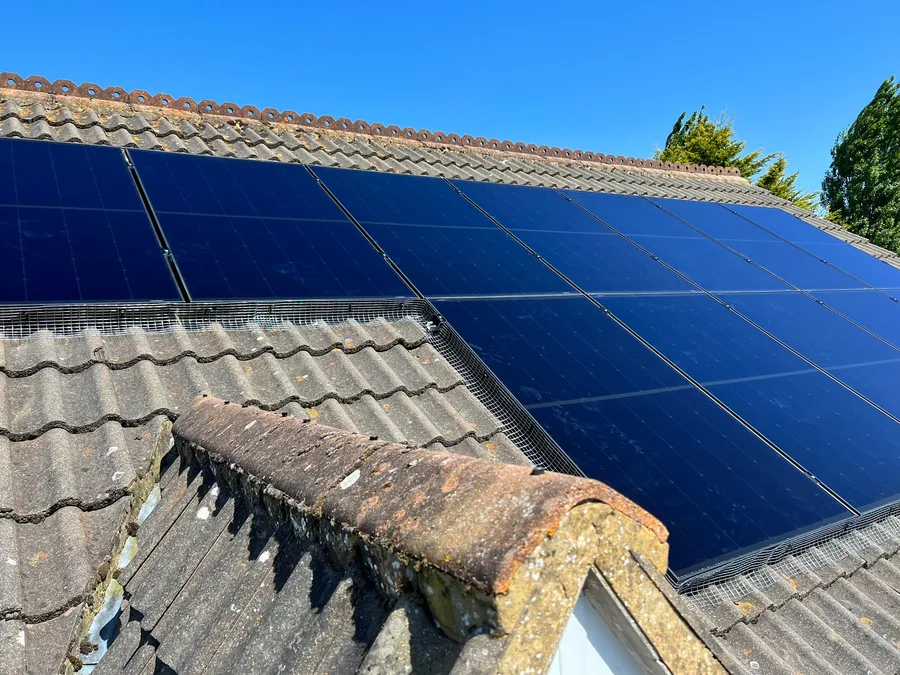
Solar Panels
Generate your own electricity in the day to fill the battery.
See solar installation in Kent →
Get your home energy estimate
Tell us when your household uses most of its electricity and whether you already have panels, and we will start sizing storage.
No cost to ask, nothing to sign. Finance may be available on qualifying routes.
Sending your details commits you to nothing. We may follow up to clarify your usage before a battery is specified.